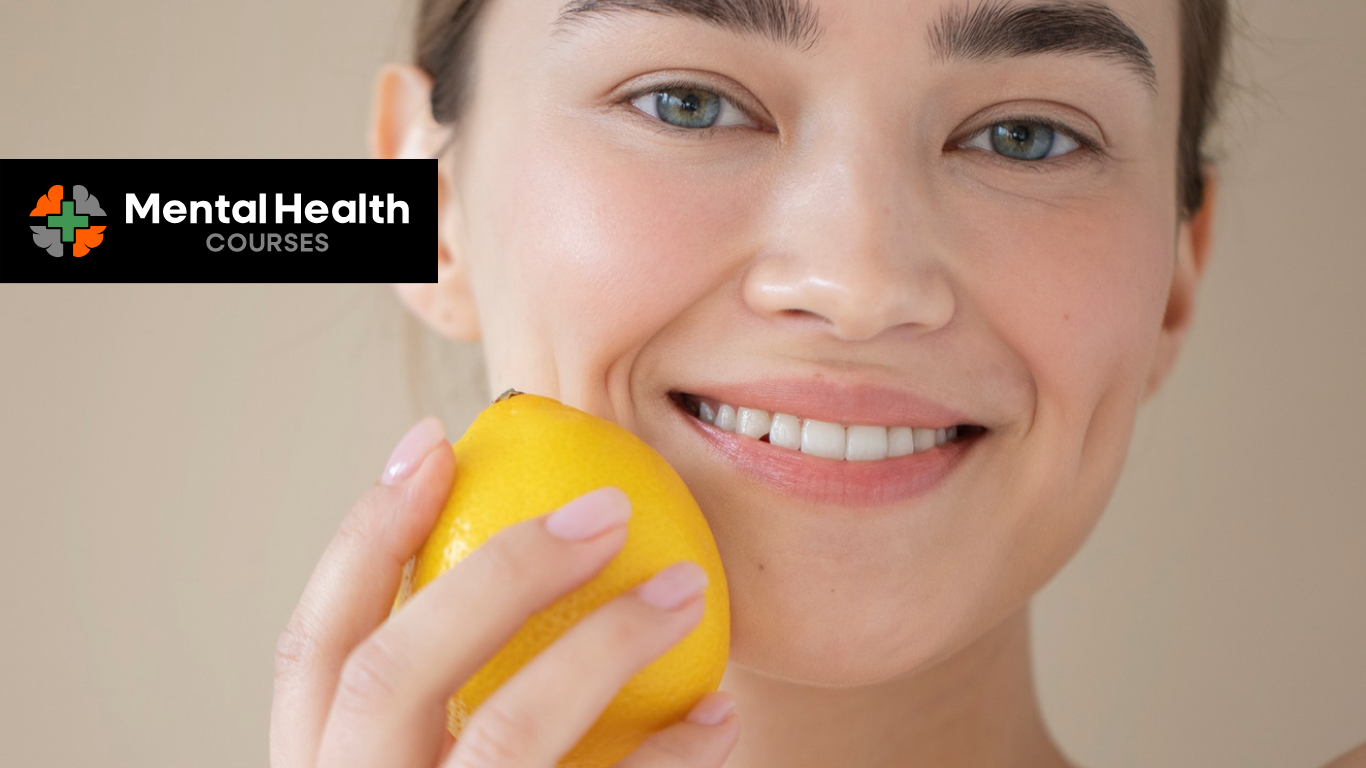
We were recently challenged by a client who asked us to answer the question whether eating lemons will improve your mental wellbeing. In recent years, the connection between diet and mental health has gained increasing attention. We know that a balanced diet can support overall well-being, but could something as simple as eating lemons play a role in improving mental health? Let’s dive into the potential benefits of lemons, both physically and mentally, and explore whether this citrus fruit can contribute to a better mood, focus, and emotional balance.
The Power of Vitamin C for Mental Health
Lemons are famously rich in vitamin C, an essential nutrient that has numerous health benefits. Vitamin C is a powerful antioxidant, which means it helps neutralize free radicals in the body, reducing oxidative stress. While this process is often
associated with physical health—particularly in strengthening the immune system—there’s growing evidence to suggest that it also affects mental well-being.
Low levels of vitamin C have been linked to symptoms of anxiety, depression, and fatigue. Vitamin C plays a role in the production of neurotransmitters like serotonin, which are essential for regulating mood and reducing feelings of anxiety and
depression. By consuming foods rich in vitamin C, like lemons, we may help support the body’s ability to manage stress and maintain emotional balance.
Lemons and Stress Reduction
One of the most notable claims about lemons is their ability to reduce stress. The aroma of lemon has been shown in some studies to have a calming effect on the body and mind. Research indicates that the scent of citrus fruits, including lemon,
can lower cortisol levels—your body’s primary stress hormone. Cortisol, when chronically elevated, can negatively affect your mental health, contributing to anxiety, depression, and even cognitive decline.
Incorporating lemon into your environment through aromatherapy, or simply adding it to your diet, may help reduce the physiological markers of stress and create a more relaxed state of mind.
Lemon’s Role in Hydration and Mental Clarity
Hydration is crucial for maintaining mental clarity and focus. Dehydration can lead to fatigue, brain fog, and difficulty concentrating, all of which can negatively affect mental health. Drinking water with lemon is a simple way to enhance hydration while adding a refreshing burst of flavour.
The slight acidity of lemon water can also support digestion, ensuring that your body absorbs nutrients more effectively, including those needed for optimal brain function.
Staying hydrated with lemon-infused water can therefore contribute to improved concentration, a clearer mind, and a better overall sense of mental well-being
The Psychological Benefits of Eating Healthy
On a psychological level, eating healthy foods like lemons can promote a sense of accomplishment and self-care. When we take the time to nourish our bodies with wholesome, nutrient-rich foods, it can boost self-esteem and help combat feelings of
inadequacy or self-neglect. In this way, incorporating lemons into a healthy diet might not only impact your physical health but also foster a positive mindset.
Conclusion: A Small But Meaningful Boost
While eating lemons alone is unlikely to be a magic cure for mental health issues, it’s clear that they can contribute to overall mental well-being. From boosting vitamin C levels and reducing stress to promoting hydration and mental clarity, the humble
lemon offers a range of benefits that can support both the body and the mind.
Interested in learning more interesting facts about mental health? Sign up for our newsletter so we can notify you when we get.
References
Carr, A. C., & Maggini, S. (2017). Vitamin C and immune function. Nutrients, 9(11), 1211. https://doi.org/10.3390/nu9111211
Grandjean, A. C., & Scherer, P. W. (2006). Odorant-evoked responses in the brain and their potential therapeutic effects. Psychology of Affective Disorders, 94, 59-67. https://doi.org/10.1016/j.jpsychores.2005.12.004
Kiecolt-Glaser, J. K., McGuire, L., Robles, T. F., & Glaser, R. (2002). Husband’s marital interaction and wives' immune function. Psychosomatic Medicine, 64(4), 672- 680. https://doi.org/10.1097/01.PSY.0000222210.20628.D6
Lange, M., & Kalisch, R. (2019). Effects of lemon fragrance on human stress response: A randomized controlled trial. Psychopharmacology, 236(8), 2351-2357. https://doi.org/10.1007/s00213-019-05251-7
Messerli, M. A., & Vollmann, M. (2019). Hydration and cognitive performance: A review. Frontiers in Nutrition, 6, 92. https://doi.org/10.3389/fnut.2019.00092
Micha, R., Peñalvo, J. L., Cudhea, F., & Imamura, F. (2017). Association between dietary factors and mortality from heart disease, stroke, and type 2 diabetes in the United States. JAMA, 317(9), 912-924. https://doi.org/10.1001/jama.2017.0947
Yamamoto, K., & Fukuda, H. (2018). Citrus fruit-derived bioactive compounds: Their mechanisms and functions for health benefits. Food Research International, 107, 282-290. https://doi.org/10.1016/j.foodres.2018.02.035