
Mental health is now an important part of workplace health and safety. For health & safety professionals, understanding how to identify, assess and manage mental health risks is becoming just as important as assessing physical hazards.
But with different courses and approaches available, what should you actually look for in mental health risk assessment training?
The right training should go beyond simply raising awareness. It should give you the knowledge, practical tools and confidence to identify mental health risks, carry out appropriate assessments, recommend suitable control measures and support your organisation in taking action.
For health & safety professionals, it should also provide evidence that you have developed the appropriate knowledge and skills.
Why Is Mental Health Risk Assessment Important?
Work-related mental health is a significant issue across UK workplaces.
According to the Health and Safety Executive (HSE), an estimated 964,000 workers in Great Britain suffered from work-related stress, depression or anxiety in 2024/25. This resulted in approximately 22.1 million working days lost.
Mental health was also responsible for 52% of all work-related ill health cases in 2024/25, making stress, depression and anxiety the largest category of work-related ill health reported by HSE.
This means mental health cannot simply be treated as an HR or wellbeing issue. It can be directly relevant to an organisation’s health and safety responsibilities.
HSE states that employers have a legal duty to protect workers from stress at work by carrying out a risk assessment and acting on the findings. HSE recommends that the risks and their impact on mental and physical health are assessed in the same way as other work-related health and safety risks.
For health & safety professionals, having the right training can therefore help turn this responsibility into a practical process.
What Should Good Mental Health Risk Assessment Training Cover?
When choosing mental health risk assessment training, it is worth looking beyond the course title.
A useful course should help you understand not just what mental health risks are, but how to assess and manage them in your organisation.
1. Understanding Mental Health in the Workplace
The starting point should be understanding how mental health can be affected by the workplace.
This can include factors such as:
- Workload and excessive demands
- Lack of control
- Poor communication
- Workplace relationships
- Bullying and conflict
- Organisational change
- Lack of support
- Role uncertainty
- Working patterns and environments
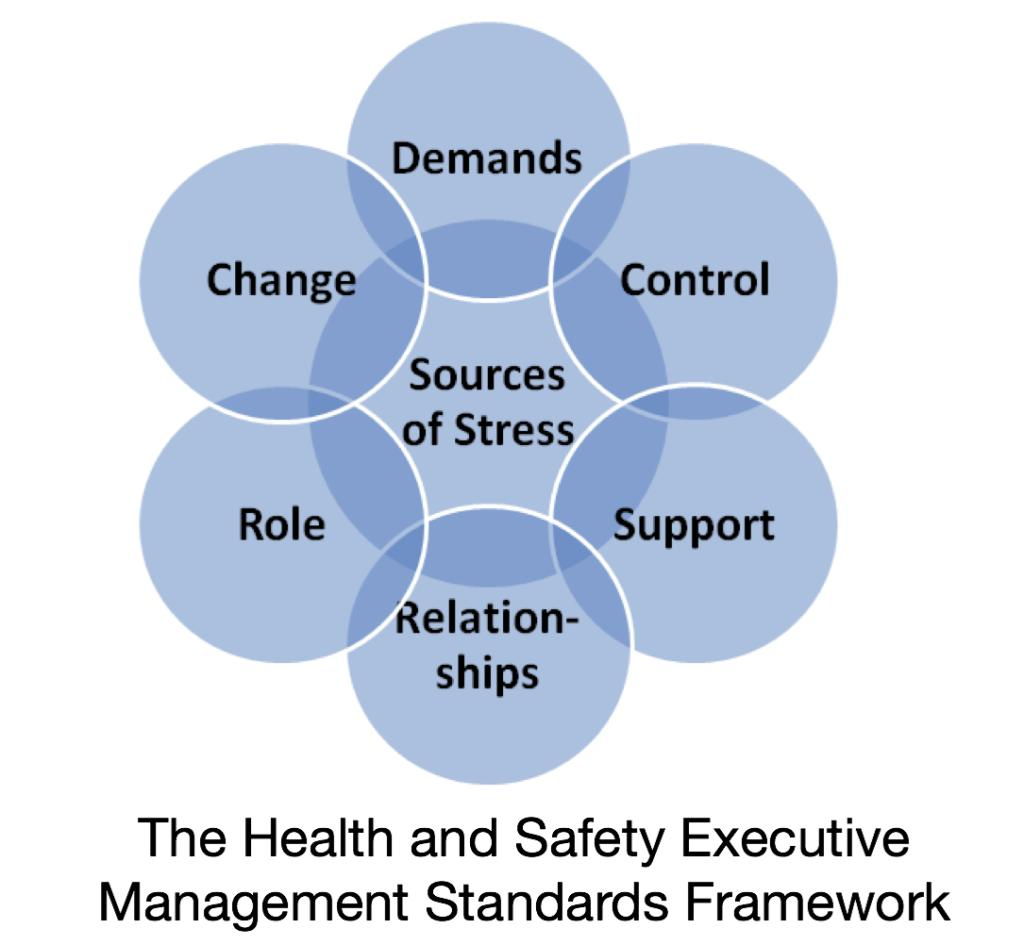
HSE’s Management Standards identify six key areas associated with work-related stress: demands, control, support, relationships, role and change.
Mental health risk assessment training should help you understand how these factors can appear within your own organisation rather than treating mental health as an abstract topic.
2. Identifying Mental Health Hazards
A traditional health and safety risk assessment may make it relatively straightforward to identify physical hazards such as machinery, slips, trips or hazardous substances.
Mental health risks can be less visible.
Training should therefore help professionals recognise potential psychosocial hazards and understand how workplace conditions may contribute to stress or poor mental health.
This is particularly important because the same workplace factor can affect people differently. HSE notes that stress occurs when people experience pressures or demands that they feel unable to cope with, and that individual factors such as skills and experience can influence how someone responds.
3. Carrying Out a Mental Health Risk Assessment
Knowing that an assessment is required is not enough. Health & safety professionals need to know how to carry one out.
Good mental health risk assessment training should provide a structured approach covering areas such as:
- Identifying the hazards and potential stressors
- Identifying who may be affected and how
- Evaluating the level of risk
- Identifying appropriate control measures
- Recording findings
- Implementing actions
- Monitoring and reviewing the assessment
HSE’s Management Standards provide a step-by-step approach to assessing and managing work-related stress, while also emphasising the importance of focusing on organisational causes and prevention.
4. Turning Findings Into Practical Actions
A risk assessment should lead to action.
The purpose is not simply to produce another document that sits in a health and safety folder.
Effective training should help you understand how to translate assessment findings into practical interventions. Depending on the risks identified, this might involve reviewing workloads, improving communication, increasing management support, addressing workplace relationships or considering changes to working practices.
HSE specifically recommends focusing on preventing and addressing organisational causes of work-related stress rather than relying only on individual interventions.
5. Recording and Demonstrating What You Have Done
Evidence is an important part of health and safety management.
HSE advises organisations to document what they have done throughout the stress risk assessment process, creating an audit trail that can demonstrate how the organisation approached the risks and implemented recommended actions.
For professionals undertaking training, having a recognised certificate can also provide useful evidence of learning and professional development.
Why Is Mental Health Risk Assessment Training Particularly Relevant to Health & Safety Professionals?
Mental health can sometimes fall between different organisational responsibilities.
HR may deal with employee relations. Wellbeing teams may coordinate support programmes. Occupational health may provide specialist advice. Line managers may be responsible for day-to-day employee support.
But health & safety professionals have an important role in identifying and managing workplace risks.
Having appropriate mental health risk assessment training can help health & safety professionals contribute more confidently to conversations around workplace stress and mental health while keeping the focus on risk assessment and prevention.
It can also help create a more joined-up approach between health & safety, HR, wellbeing, occupational health and management teams.
The Financial Impact of Poor Mental Health
There is also a significant business case for taking workplace mental health seriously.
Deloitte estimated in 2024 that poor employee mental health costs UK employers approximately £51 billion per year. Its research also found that, on average, employers could receive around £4.70 in improved productivity for every £1 invested in supporting employee mental health.
These figures don’t mean that every organisation will achieve the same return, but they demonstrate the potential scale of the issue.
For employers, investing in the knowledge and capability to identify risks early can therefore form part of a wider approach to reducing workplace stress and supporting employee wellbeing.
What Should You Look for When Choosing Mental Health Risk Assessment Training?
If you are responsible for health and safety within your organisation, consider whether the course provides:
Practical, not just theoretical, learning
Look for training that explains how to apply mental health risk assessment principles in a real workplace.
Guidance that can be used after the course
The course should leave you with knowledge and practical understanding that you can take back into your organisation.
Support after training
Mental health risk assessment can raise questions once you start applying it to your own workplace. Ongoing support can be valuable when you need to discuss how the learning applies to your organisation.
Evidence of completion
A certificate can provide evidence that the relevant people within your organisation have completed mental health risk assessment training.
Confidence to take action
Perhaps most importantly, the training should help you feel more confident about identifying risks, assessing them and deciding what needs to happen next.
What Makes Our Mental Health Risk Assessment Training Different?
Our Mental Health Risk Assessment Training is based closely on the HSE Management Standards approach to tackling work-related stress.
The HSE Management Standards identify six key areas that can contribute to work-related stress:
- Demands – workload, work patterns and the working environment
- Control – how much say someone has over the way they do their work
- Support – the encouragement, resources and support provided by the organisation, managers and colleagues
- Relationships – promoting positive working and preventing conflict, bullying and harassment
- Role – whether people understand their role and responsibilities
- Change – how organisational change is managed and communicated
This gives health & safety professionals a practical framework for looking beyond individual symptoms and considering the workplace factors that may be contributing to mental health risks.
Our training helps you understand how these principles can be applied when carrying out a mental health risk assessment within your organisation.
You don’t just complete the training and get left on your own. Our course includes ongoing support, so you can get help when you start applying what you’ve learned in your workplace.
You also receive a certificate as evidence of completing the training, and our money-back guarantee provides additional reassurance for organisations investing in the course.